
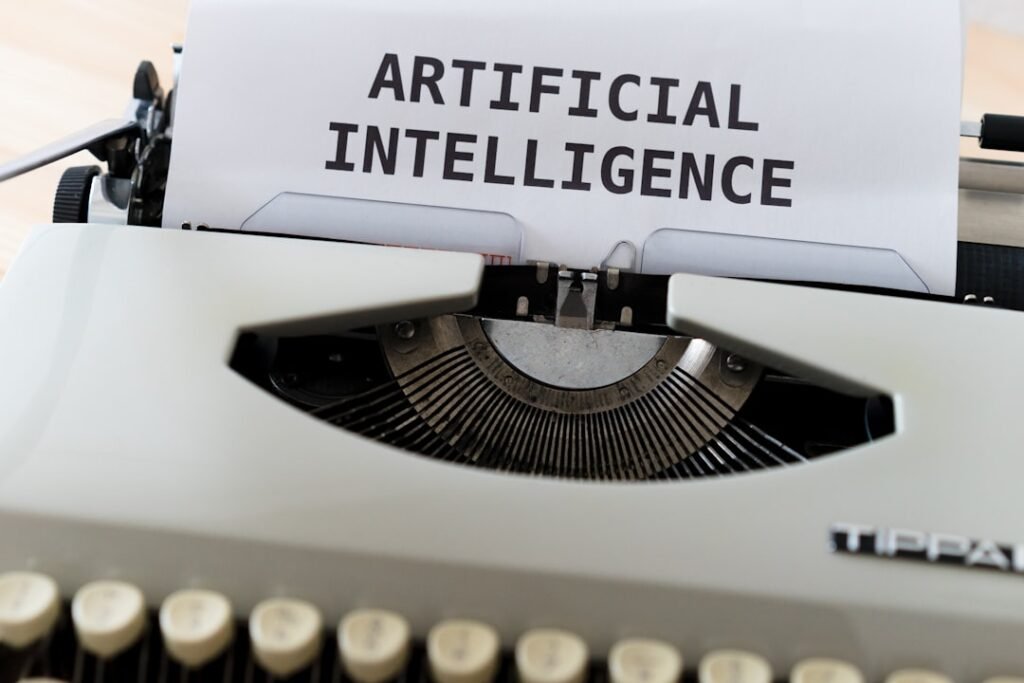
Artificial Intelligence (AI) has emerged as one of the most transformative technologies of the 21st century, fundamentally altering the way humans interact with machines and each other. The rapid advancements in AI have not only enhanced computational capabilities but have also opened new avenues for innovation across various sectors. From self-driving cars to virtual assistants, AI is becoming increasingly integrated into daily life, prompting discussions about its potential and implications.
As society stands on the brink of an AI-driven future, understanding the trajectory of these advancements is crucial for harnessing their benefits while mitigating potential risks. The evolution of AI can be traced back to its inception in the mid-20th century, but it is only in recent years that significant breakthroughs have occurred. The convergence of vast amounts of data, powerful computing resources, and sophisticated algorithms has propelled AI into a new era.
This introduction sets the stage for exploring the current applications of AI, the advancements in machine learning, and the profound impact these technologies have on various industries. As AI continues to evolve, it raises important questions about ethics, societal implications, and the future landscape of human interaction with technology.
Key Takeaways
- AI advancements are rapidly transforming multiple sectors with innovative technologies.
- Machine learning improvements are driving more accurate and efficient AI applications.
- AI significantly impacts industries such as healthcare, business, and marketing.
- Ethical considerations are crucial in responsible AI development and deployment.
- AI is poised to shape the future of society by influencing healthcare, business, and social dynamics.
Current Applications of AI
AI’s current applications are as diverse as they are impactful, permeating numerous aspects of everyday life. In the realm of consumer technology, virtual assistants like Siri and Alexa have become household names, providing users with hands-free access to information and services. These AI-driven tools utilize natural language processing to understand and respond to user queries, making technology more accessible and user-friendly.
Additionally, recommendation algorithms employed by platforms such as Netflix and Amazon analyze user behavior to suggest content and products tailored to individual preferences, enhancing user experience and engagement. Beyond consumer applications, AI is making significant strides in sectors such as finance, healthcare, and transportation. In finance, algorithms are employed for fraud detection, risk assessment, and algorithmic trading, enabling institutions to make data-driven decisions with unprecedented speed and accuracy.
In healthcare, AI is revolutionizing diagnostics through image recognition technologies that can identify diseases from medical imaging with remarkable precision. Furthermore, autonomous vehicles are being developed using AI systems that process real-time data from sensors to navigate safely and efficiently. These applications illustrate just a fraction of AI’s potential, highlighting its role as a catalyst for innovation across various fields.
Advancements in Machine Learning

Machine learning, a subset of AI, has witnessed remarkable advancements that have significantly enhanced its capabilities. At its core, machine learning involves training algorithms to recognize patterns in data, allowing systems to learn from experience without being explicitly programmed. Recent developments in deep learning—a branch of machine learning that utilizes neural networks—have led to breakthroughs in image and speech recognition, natural language processing, and even game playing.
These advancements have enabled machines to achieve human-like performance in tasks that were once thought to be exclusive to human intelligence. One notable advancement in machine learning is the introduction of transfer learning, which allows models trained on one task to be adapted for another with minimal additional training. This approach has proven particularly effective in scenarios where labeled data is scarce or expensive to obtain.
Additionally, advancements in reinforcement learning have enabled machines to learn optimal strategies through trial and error, leading to impressive achievements in complex environments such as gaming and robotics. As machine learning continues to evolve, it holds the promise of unlocking new capabilities that could further enhance AI applications across various domains.
The Impact of AI on Various Industries
The impact of AI on various industries is profound and far-reaching, reshaping traditional practices and driving efficiency. In manufacturing, for instance, AI-powered robots are streamlining production processes by performing repetitive tasks with precision and speed. This not only reduces labor costs but also minimizes human error, leading to higher quality products.
Predictive maintenance powered by AI algorithms allows manufacturers to anticipate equipment failures before they occur, thereby reducing downtime and optimizing operational efficiency. In the realm of agriculture, AI is transforming farming practices through precision agriculture techniques that utilize data analytics to optimize crop yields. Drones equipped with AI technology can monitor crop health and assess soil conditions, enabling farmers to make informed decisions about irrigation and fertilization.
Similarly, in retail, AI-driven inventory management systems analyze consumer behavior and sales trends to optimize stock levels and reduce waste. These examples underscore how AI is not merely a tool for automation but a transformative force that enhances productivity and decision-making across diverse industries.
Ethical Considerations in AI Development
| Metric | Description | Value / Example | Unit |
|---|---|---|---|
| Number of AI Research Papers Published (2023) | Total AI-related research papers published globally in 2023 | 45,000 | papers |
| AI Model Parameters (GPT-4) | Number of parameters in the GPT-4 language model | 175 billion | parameters |
| Average AI Model Training Time | Time taken to train a large-scale AI model | 3 weeks | weeks |
| AI Adoption Rate in Enterprises (2023) | Percentage of enterprises using AI technologies | 35% | percent |
| AI Accuracy in Image Recognition | Top AI models’ accuracy on ImageNet dataset | 88% | percent |
| Global AI Market Size (2023) | Estimated size of the AI market worldwide | 150 billion | USD (billions) |
| Energy Consumption of Training Large AI Models | Estimated energy used to train a large transformer model | 300,000 | kWh |
| AI-related Job Openings (2023) | Number of job openings related to AI roles globally | 250,000 | jobs |
As AI technologies continue to advance at an unprecedented pace, ethical considerations surrounding their development and deployment have come to the forefront of public discourse. One major concern is the potential for bias in AI algorithms, which can lead to discriminatory outcomes in areas such as hiring practices or law enforcement. If the data used to train these algorithms reflects societal biases, the resulting decisions may perpetuate existing inequalities.
Addressing this issue requires a concerted effort from developers to ensure that training datasets are representative and that algorithms are regularly audited for fairness. Another ethical consideration involves the implications of job displacement due to automation. As AI systems become capable of performing tasks traditionally carried out by humans, there is a growing fear that many jobs may become obsolete.
This raises questions about the responsibility of companies and governments to retrain workers and create new opportunities in an evolving job market. Furthermore, issues related to privacy and surveillance arise as AI technologies are increasingly used for monitoring purposes. Striking a balance between innovation and ethical responsibility is essential for fostering public trust in AI technologies.
The Future of AI in Healthcare

The future of AI in healthcare holds immense promise for improving patient outcomes and streamlining medical processes. One area where AI is making significant strides is in diagnostics. Machine learning algorithms can analyze medical images with remarkable accuracy, assisting radiologists in identifying conditions such as tumors or fractures more efficiently than ever before.
This not only enhances diagnostic precision but also allows healthcare professionals to focus on patient care rather than administrative tasks. Moreover, AI has the potential to revolutionize personalized medicine by analyzing genetic information and patient histories to tailor treatment plans specifically for individuals. Predictive analytics can identify patients at risk for certain conditions based on their health data, enabling proactive interventions that could prevent diseases before they manifest.
As research continues to advance in this field, the integration of AI into healthcare systems promises a future where medical care is more efficient, effective, and personalized than ever before.
AI in Business and Marketing
In the business world, AI is reshaping marketing strategies by enabling companies to understand consumer behavior on a deeper level. Through data analytics and machine learning algorithms, businesses can segment their audiences more effectively and create targeted marketing campaigns that resonate with specific demographics. This level of personalization not only enhances customer engagement but also drives conversion rates by delivering relevant content at the right time.
Additionally, chatbots powered by AI are transforming customer service by providing instant support and assistance around the clock. These virtual assistants can handle a wide range of inquiries, freeing up human agents to focus on more complex issues that require personal attention. As businesses continue to leverage AI technologies for marketing and customer service purposes, they are likely to see improved efficiency and customer satisfaction levels.
The Role of AI in Shaping the Future of Society
The role of AI in shaping the future of society cannot be overstated; it has the potential to redefine how individuals interact with technology and each other. As AI systems become more integrated into daily life, they will influence everything from education to transportation. For instance, personalized learning platforms powered by AI can adapt educational content to meet individual student needs, fostering a more inclusive learning environment that accommodates diverse learning styles.
Moreover, as cities become smarter through the integration of AI technologies in infrastructure management and public services, urban living will be transformed. Traffic management systems utilizing real-time data can optimize traffic flow and reduce congestion, leading to more efficient transportation networks.
Ensuring equitable access to AI technologies will be crucial in preventing disparities from widening further. In conclusion, as society navigates the complexities of an increasingly AI-driven world, it is essential to embrace both the opportunities and challenges presented by these advancements. By fostering responsible development practices and prioritizing ethical considerations, humanity can harness the full potential of artificial intelligence while ensuring a future that benefits all members of society.
Artificial intelligence continues to revolutionize various industries, and staying updated on the latest advancements is crucial. For those interested in the most recent innovations and updates in technology, including AI, I recommend checking out this article on breaking tech news at Tech Progress Lab. It provides insights into how AI is shaping the future and the latest trends that are emerging in the tech landscape.